
Policy · United Nations · UN DESA · Co-hosted · October 16, 2026
Making the case at the United Nations for a right to challenge technology
The Hope Group and UN DESA co-hosted Inclusive by Design, a panel for the International Day for the Eradication of Poverty. Rev. Hope argued that the right to challenge technology belongs among our human rights.
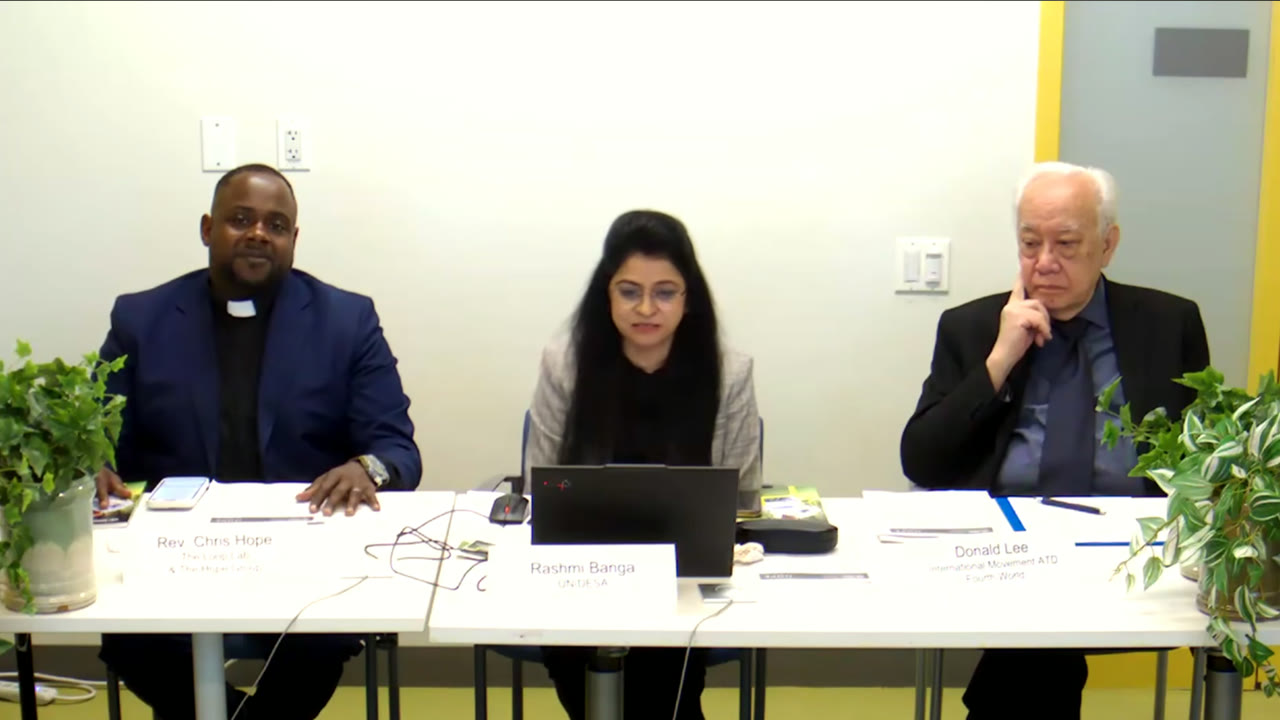
On October 16, 2026, the International Day for the Eradication of Poverty, The Hope Group and the United Nations Department of Economic and Social Affairs co-hosted Inclusive by Design: Putting social inclusion at the centre of economic, digital, and energy transformations. The panel met the day after UN DESA launched its World Social Report 2026, which calls for a New Economics of Social Inclusion: the economic, digital, and energy transformations underway may be unavoidable, but the exclusions they bring are a choice.
Rashmi Banga, Chief of the Development Research Branch in UN DESA’s Economic Analysis and Policy Division, chaired. Rev. Hope sat on the panel with Danny Sriskandarajah of the New Economics Foundation, Safdar Sohail of the Social Protection Resource Centre, Yoke Ling Chee of Third World Network, Donald Lee of ATD Fourth World, and Amson Sibanda of UN DESA. It follows the lab’s earlier UN DESA session on AI in education.
Asked how AI affects the right to a safe home, Rev. Hope started with a person, not a policy: a single mother in his parish with two small children, months into a search for housing. Imagine, he said, that an algorithm turns her down, and she does not know why or whom to ask. His answer was that human rights must include the right to challenge technology. As a standards company, the lab holds to a simple premise: no AI decision without a way to make it right. That means a review, a human being to talk to, and a path to appeal, not an automated wall.
Housing discrimination did not begin with AI, he reminded the room. What is new is that AI can automate old inequities and scale them. He asked governments and the UN to set clear expectations for how the AI industry, cities, and nations build and deploy these systems, around three north stars: transparency; accountability, including a path to redress; and community voice, so the people most affected help design the tools instead of having them deployed on them after the fact. He pointed to Boston and Cambridge, where he has helped develop AI civil rights measures, as proof that this work can start locally. Act local, think global.
In the open discussion he proposed giving countries a reason to compete on inclusion: a public grade for how socially inclusive each nation is, so the urge to lead works for people instead of against them. His closing ask was for the UN to use its reach with nation states and foundations to bring real resources to underestimated communities, from access to the tech economy and the workforce to curricula that help them become financially self-sustaining.
Rev. Hope’s remarks begin at 37:27 in the recording. He returns in the discussion at 1:12:33 and closes at 1:18:42.
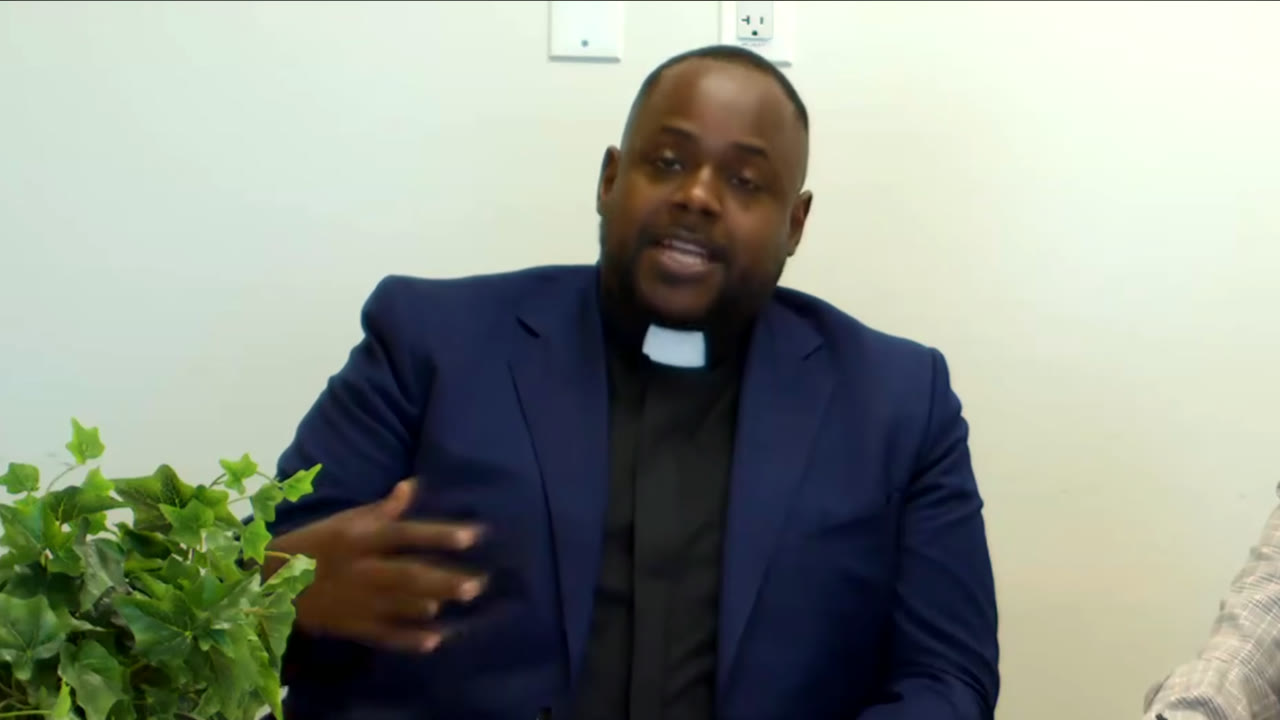 Inclusive by Design: the full panel Opens on YouTube. Nothing loads until you click.
More projects
All projects Tool · Project Lookout
Every opportunity your organization deserves, found and ranked for you
A patent pending procurement-intelligence platform that sweeps 140+ grant, contract, and bid sources every night, verifies every link, and scores...
Patent pending · Live since October 6 · Free for BECMA members
Read more
 Program · AI Access Lab
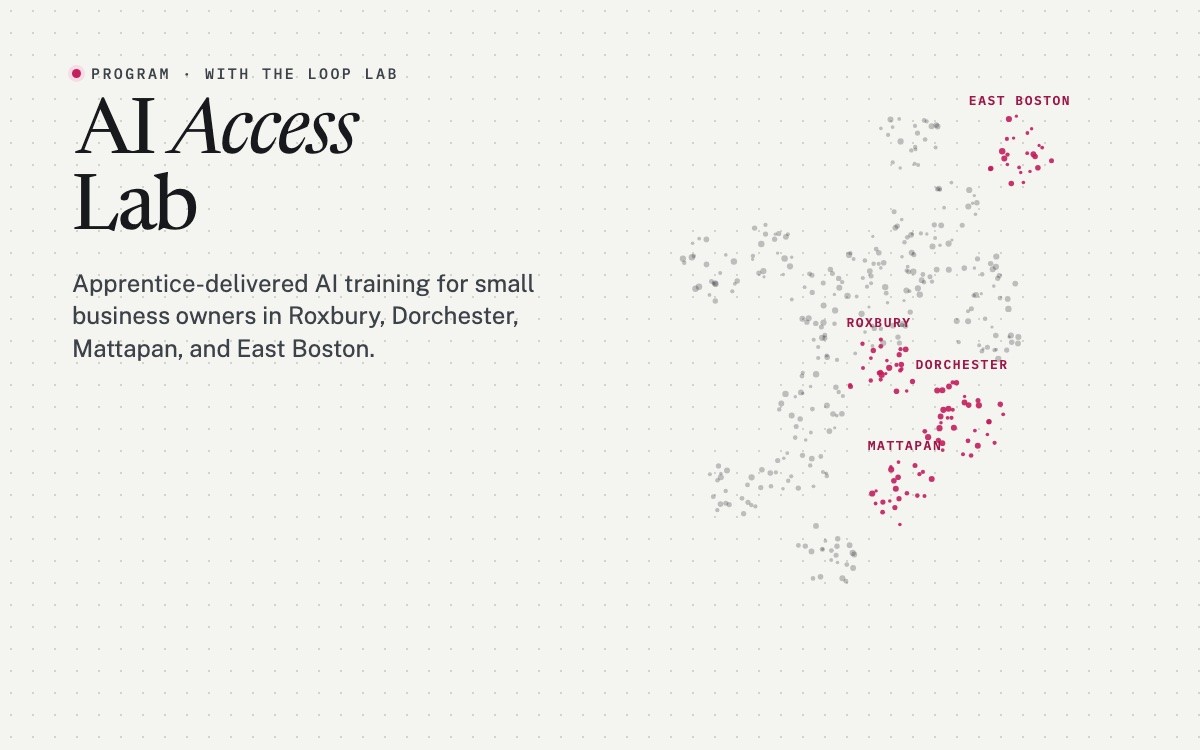
AI Access Lab: apprentice-delivered AI training for small business owners
A six-month, neighborhood-based program that trains 40 to 50 small business owners in Roxbury, Dorchester, Mattapan, and East Boston to solve real...
2026 · with The Loop Lab and the City of Boston
Read more
Policy · United Nations
Making the case at the United Nations for a right to challenge technology
The Hope Group and UN DESA co-hosted Inclusive by Design, a panel for the International Day for the Eradication of Poverty. Rev. Hope argued that the...
Co-hosted · October 16, 2026
Read more